

































































































|
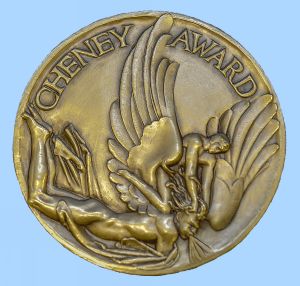
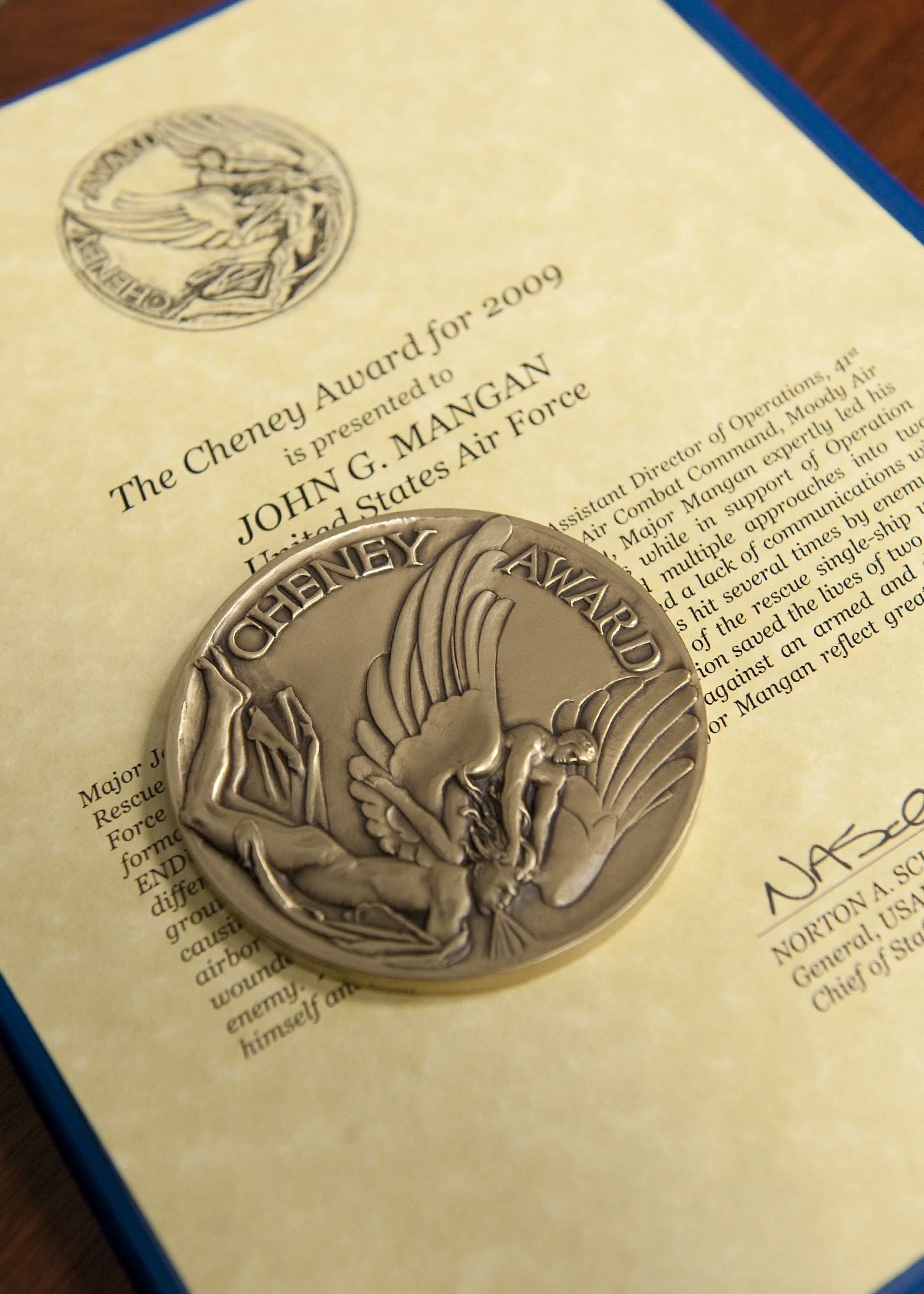
The Cheney Award is an aviation award presented by the United States Air Force in memory of 1st Lt. William Cheney, who was killed in an air collision over Italy in 1918. It was established in 1927, and is awarded to an airman for an act of valor, extreme fortitude or self-sacrifice in a humanitarian interest, performed in connection with aircraft, but not necessarily of a military nature. The award consists of a certificate, a bronze statue and a $500 honorarium.
Listed below are USAF helicopter personnel known to have been awarded the coveted award IF YOU KNOW OF OTHERS RECEIVING THIS AWARD ALONG WITH MISSION SPECIFICS, LET US KNOW
~2011~ ~~CLICK ON PHOTOS TO ENLARGE~
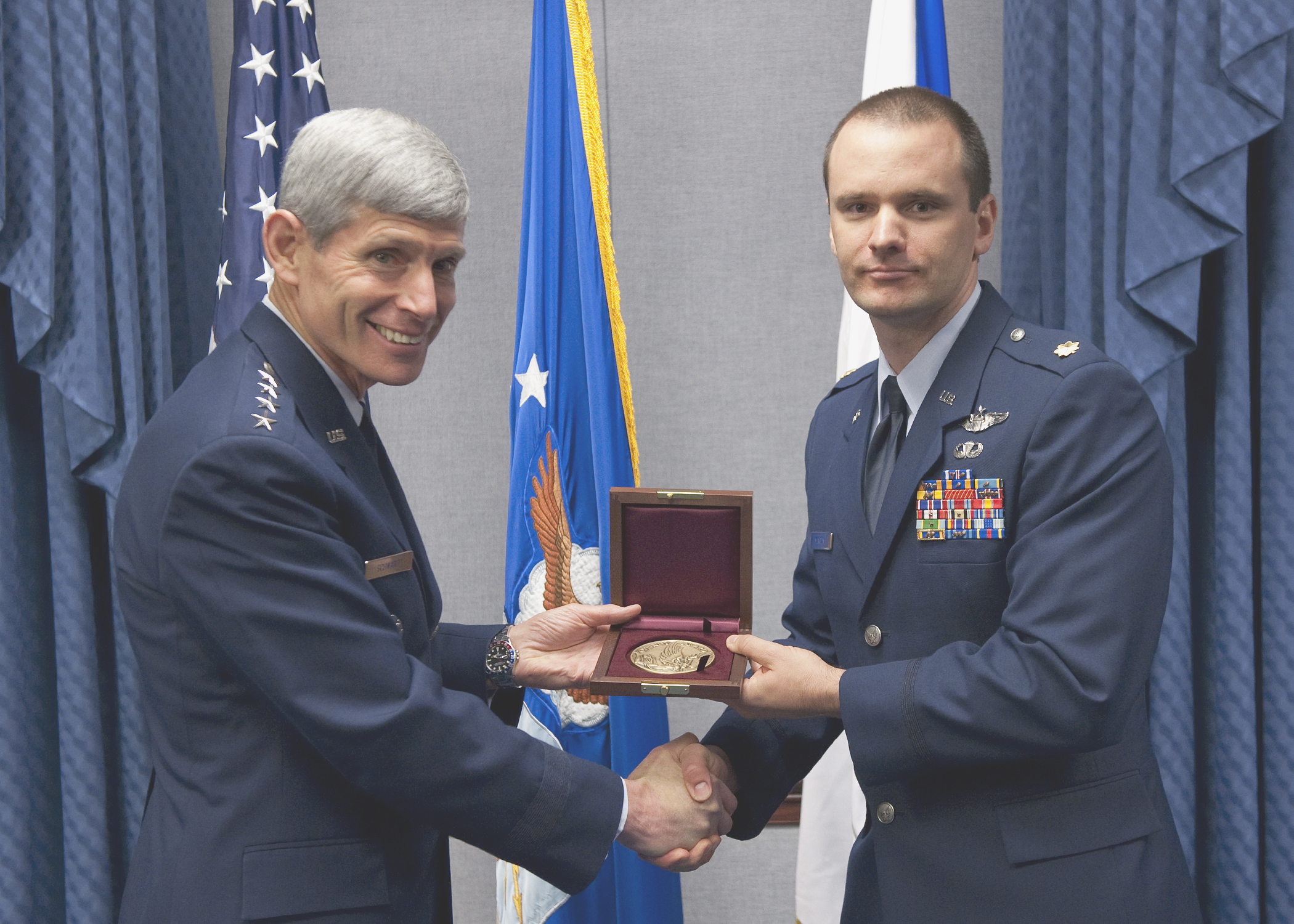
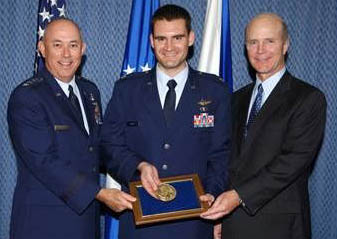
11/6/2012 - WASHINGTON (AFNS) -- Two Airmen received the 2011 Cheney Award here Nov. 1 from Air Force Vice Chief of Staff Gen. Larry Spencer for their distinguished service during a search and rescue mission on Mount Stuart, Wash.
Capt. Kenneth Green, UH-1N Twin Huey pilot, and Master Sgt. Joseph Brownell, field operation section chief, saved the lives of a civilian and his son Aug. 20, 2011, after they suffered acute mountain sickness while climbing the mountain's 9,000-foot peak.
Green executed a 200-foot hover and hoisted Brownell down to access the climbers. Brownell then stabilized both people and extracted them by hoist. Near maximum weight, the aircraft then began to descend, so Green expertly maneuvered the aircraft to lower terrain.
"The mission called and these two gentlemen launched," Spencer said. "When the mission calls, (Airmen) don't stop and ask questions. We just go rely on the training we have received."
The Cheney Award honors an Air Force member for an act of valor, extreme fortitude or self-sacrifice in a humanitarian interest, performed in connection with aircraft, but not necessarily of a military nature. It is presented in memory of 1st Lt. William Cheney, who was killed in an air collision over Italy in 1918.
"There are heroic things going on in our Air Force every day, and these two gentlemen epitomize that," Spencer said.
Both Airmen said they were humbled and honored to receive the award, and said the mission would not have been a success without the dedication of everyone involved.
Green credited his Air Force training for ensuring he and other Airmen can continue to ably serve the nation.
Brownell was quick to point out that many other Airmen helped them the day of the rescue, not to mention the two other crew members on the mission.
"We are truly a team -- everybody from the maintainers who maintain the helicopter to the guys flying," he said. "We can't do it without them."
~2009~
~2004~
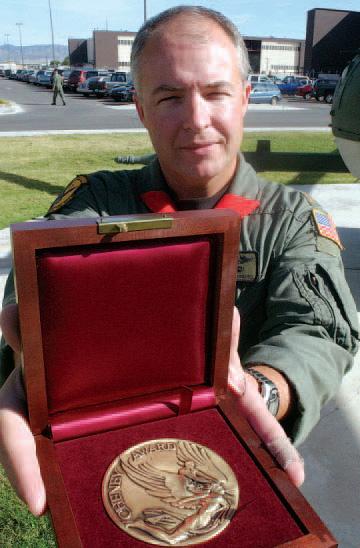
that we’ll do whatever it takes to bring our folks home,” Major Groves said. Air Force Chief of Staff Gen. T. Michael Moseley and acting Secretary of the Air Force Pete Geren presented Major Groves with the Cheney medallion. The major was accompanied by several family members. “It’s an honor and a privilege to be able to give this to you for this act of heroism,” General Moseley told Major Groves. “You represent the finest traditions of this service.”
~2003~ For the second straight year, Airmen from the 21st Special Operations Squadron at Royal Air Force Mildenhall, England, have earned the Cheney Award for aerial achievement.
Capt's. (then 1st.Lt.) Randell Voas and Craig Prather earned the award for their role in the March 26, 2003, air drop mission of the U.S. Army’s 173rd Airborne Brigade over Bashur in northern Iraq.
The mission was the largest combat air drop since the Vietnam War. “These two took their (MH-53M Pave Low) helicopter from Greece, flew almost 700 miles to the drop area,” said Air Force Chief of Staff Gen. John P. Jumper. As part of a 1,000-Soldier airdrop mission, the crew provided on-call fire support, immediate casualty evacuation, triage and recovery for 37 paratroopers.
The flight was conducted at maximum wartime weight in deteriorating weather and included three aerial refueling's. “Guys like this think these things are routine, but to those of us who don’t live that life, it is very special indeed,” General Jumper said. “It is a mark of our Air Force that we have officers of this caliber who are.”
~2002~
“The yacht was somewhere between 450 and 500 nautical miles off the southwest tip of England and had been rolled over by a wave,” Churchhill said. “On deck, a civilian sailor had been washed overboard and nearly drowned. Beneath the deck, the ship’s cook was buried under various equipment and suffered a broken collarbone, among other injuries. Both sailors appeared to have undetermined head injuries.
”The rescue unit out of Keflavik Naval Air Station, Iceland, had been notified but was more than 900 nautical miles away. Since the RAF does not maintain aerial refueling helicopters or tankers, the yacht would not be in its range for at least two more days.
“Since the true extent of the injuries was not known, it was imperative that we launch to recover the sailors immediately, knowing that even with our capabilities, we were nearly six hours away,” said the major.
Gen. Michael Moseley, Air Force vice chief of staff, gave Churchill and Leroy the award at the Pentagon in August. Secretary of the Air Force James Roche attended.
“Overall, just an awe-inspiring event,” Churchill said. “To be in front of a group of people I have long respected and admired for their own actions in various operations throughout the world and to be recognized in this manner was truly something very special for me. Especially since my mother, wife and children were able to be there. It was very humbling to realize that, though I was one of 22 men on for that mission on that night, it was the sacrifices of my family during all those long TDYs and all those late training nights that prepared me to be there.”
~1996~ Major Brad Webb, "Pave Low" pilot and designated "Pave Low" team leader, was awarded the 1996 Cheney Award for his serling performance in the back-to-back CT-43 crash recovery effort in Coratia 03-06 April 1996 and his leadership and participation in the "Operation Assured Response" mission in which his "Pave Low" teams, along with other JSOAC forced evacuated 2,126 people from 76 countries from the fighting that was takeing place in Monrovia, Liberia, 08-17 April 1996.
~1995~ MH-53 pilots Capt. Charles (Mark) Harmon and Captain Paul Moncrief and crews of "Knife 44" and "Knife 47" entered Bosnia, on 6 September 1995, in the dark of night and at low level, utilizing the Pave enhanced navigation capabilit and the crew's night vision goggles attempting to rescue the crew of a French Mirage 2000K (Call sign "Ebro 33") that shot down on the morning of 30 August 1995. The French crewmen were not located. These same MH-53 Pave Lows again entered Bosnia on 7 September 1995 in a second attempt to recover the crew of "Ebro 33" and both aircraft received damage from enemy ground fire and again, the crew of "Ebro 33" could not be located. Captain Harmon and Captain Moncrief were dually awarded the 1995 Cheney Award for their outstanding learship of the mission.
~1994~ Two HH-60G crews (Call sign "Rescue 206 & 208") from the 56th RQS at NAS Keflavik, Island received the 1994 Cheney Award for thier January 10-11, 1994 rescue of six Icelanders from their sunken rescue tug, just off the coast of Vodvlavik, Iceland. This rescue was accomplished at night during extremely bad weather conditions. Crew members known to be involved in this mission include Lt. Col. Jim Sills (P), Capt. Gary Copsey (CP), Capt. John Blumintritt (P), Capt. Gary Henderson (CP), USN Flight Surgeon Lt. Rich Assaf (FS), Sr. Amn. Jeff Frembling (FE), A1C Bill Payne (FE), Sr. Amn. Jesse Goerz (PJ) and Sr. Amn. Matt Wells (PJ).
~1993~ Colonel Russell and Major John Brainerd, of the 21st SOS, were awarded the Cheney Award for the actions of their Pave Low crews on 5 January 1993 to recover an injured French officer from Zakho, Iraq. The flew their aircraft into northern Iraq at night in snowstorms and icing conditions and receiving enemy ground fire to recover the injured French officer and deliver him to critically needed medical care at Incirlik AB.
~1992~
~1985~ Major Larry Clemons, who was also a recipient of the Distinguished Flying Cross in Vietnam, “…distinguished himself by performing a conspicuous act of valor during an aerial flight on 7 January 1985, while assigned to the 6594th Test Group, Hickam Air Force Base, Hawaii. Major Clemons’ outstanding skill and leadership as aircraft commander of an HH-53 aircraft resulted in the rescue of a seriously ill crew member aboard the vessel “Queen Victoria.” The 1,380-mile flight established a new world record for the longest overwater helicopter rescue without landing. The professional competence, aerial skill, and outstanding leadership displayed by Major Clemons reflect great credit upon himself and the United States Air Force.” https://en.wikipedia.org/wiki/Cheney_Award
~1979~ ~~CLICK ON PHOTOS TO ENLARGE~~
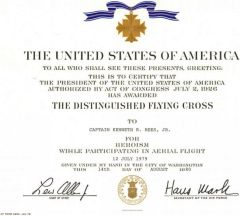
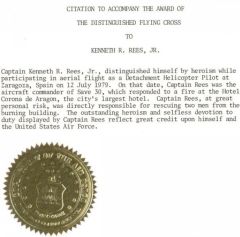
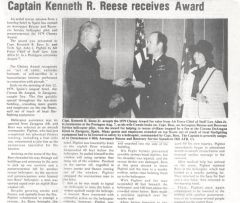
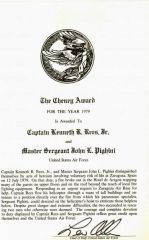
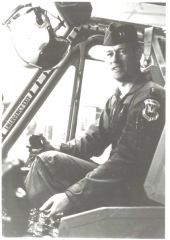
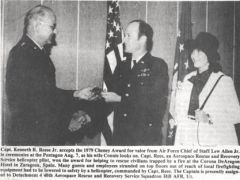
~~CLICK ON PHOTOS TO ENLARGE~~ An aerial rescue mission from a burning hotel in Spain has earned an Aerospace Rescue and Recovery Service helicopter pilot and pararescueman the 1979 Cheney Award.
The award was presented to Capt. Kenneth R. Rees Jr. and Tech. Sgt. John L. Pighini by Air Force Chief of Staff Gen. Lew Allen Jr. in a Pentagon ceremony August 7.
The Cheney Award recognizes an “act of valor, extreme fortitude, or self-sacrifice in a humanitarian interest performed in connection with aircraft.”
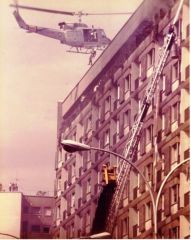
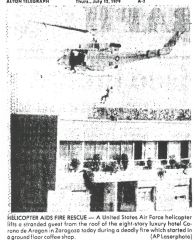
Early on the morning of July 12, 1979, Spain’s largest hotel, the Cornoa De Aragon, in Zaragoza caught fire. The fire quickly spread throughout the ten-story building…stranding many guests and employees on the top floors, well out of reach of local fire-fighting equipment.
Helicopter assistance was requested from Zaragoza AB, and Rees was selected as an aircraft commander, Pighini, who had just completed his physical fitness training, including a four-mile run, volunteered to join him as the Pararescue specialist for the mission.
Arriving on the scene of the fire, Rees threaded his way through tall buildings and antennas in the area to pick up one survivor and a Pararescueman left by another rescue helicopter. As the survivor and Pararescueman were hoisted into Rees’ helicopter, a man was spotted draped over an eighth floor window sill.
Despite growing smoke and flames, and updrafts from the fire Pighini volunteered to attempt a rescue. As Rees brought the helicopter to a hover over the hotel, Pighini was lowered by hoist to the eight floor window. Suspended 40 feet below the helicopter, he pulled himself to the window sill using curtains that hung out of the window. Perched on the narrow sill, engulfed in heavy smoke and flames coming out of the window, Pighini strapped the unconscious man to the hoist.
Just as he was ready to signal the helicopter to raise the hoist, a violent updraft swept the helicopter upward. Rees countered with corrective action on the helicopter controls; however, Pighini was swinging on the hoist and smashed into the side of the building.
His flight helmet prevented possible serious head injuries, but his shoulder was injured, and the rescue device was damaged. Rees at this point elected to lower Pighini and the man to a nearby rooftop rather than hoisting them up to the helicopter.
With Pighini and the man suspended 40 feet beneath the helicopter and 100 feet above the crowed street below, Rees made a precision approach over the nearby roof.
After being lowered to the nearby rooftop and without regard for his own injuries, Pighini immediately began to administer mouth-to-mouth resuscitation and external cardiac massage to the survivor.
After medical help has arrived on the scene, Pighini rejoined Rees in the helicopter, which had landed at a nearby parking lot. They returned to the base for fuel and a new hoist and then returned to the burning hotel.
There, Pighini once again volunteered to be lowered to the rooftop with another Pararescueman to try to rescue several people trapped on the eighth floor.
~1977~ The 1977 Cheney Award went to SSgt. James T. Carter, a UH-1N crew member from the 20th SOS at Hurlburt Field, FL., for his part in the rescue of a F-4 crew near the burning wreckage of their aircraft, with exploding ordance, on the Eglin AFB Range.
No other details are known at this time.
~1970~ Major Travis Wofford received the 1970 Cheney Award. Major Travis Wofford and Captain Travis W. Scott, Jr. both won the Air Force Cross during a rescue operation on 15 April 1970, near Dak Nay Puey, Vietnam. Two HH-3E's were scrambled from Da Nang AB, Vietnam, to rescue survivors of a downed UH-1 helicopter. The first HH-3E to go into the rescue area made three attempts, but enemy ground fire downed this aircraft, piloted by Captain Scott, who was killed upon impact. The co-pilot, Major Wofford, dragged the other two crewmen from the burning aircraft. With his bare hands he extinguished the flames still burning on their bodies. The second HH-3E evacuated the survivors of the first HH-3E but was unable to rescue personnel in the downed UH-1 helicopter.
~1969~ ~CLICK ON PHOTOS TO ENLARGE~
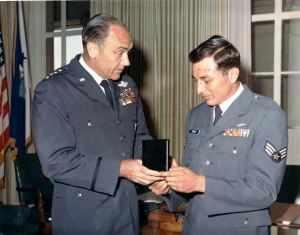
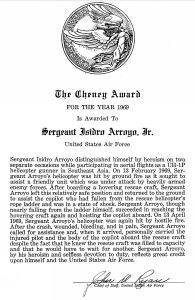
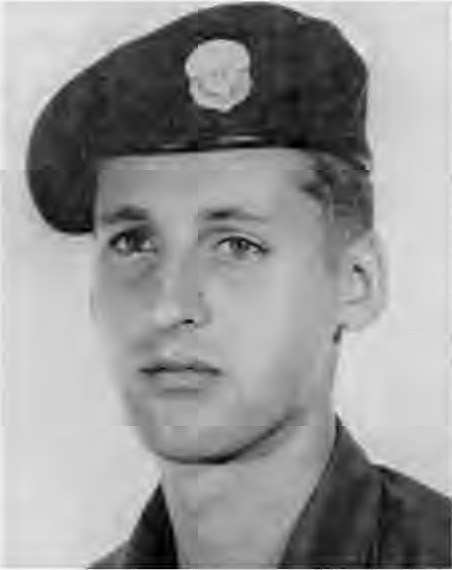
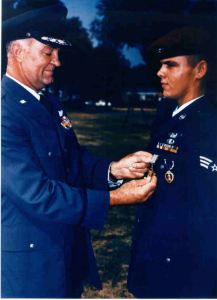
Air Force Sgt. Isidro Arroyo Jr., 22, of Steamboat Springs, Colo., a weapons instructor at Bien Thuy, Vietnam, has been named 1969 winner of the Cheney Award, Gen. John D. Ryan announced. The award, one the top honors in the Air Force, has been presented annually since 1927 to an airman for "an act of valor, extreme fortitude or self-sacrifice in connection with aircraft." Arroyo won his award as a result of actions during two helicopters missions in Southeast Asia last year. On both flights the helicopter in which the sergeant served as a gunner was shot down by hostile fire, the Air Force said. In both cases, although injured, he assisted more seriously injured crewmen to rescue helicopters. Sergeant Isidro Arroyo Jr. was awarded the 1969 Cheney Award for distinguishing himself "on two separate occasions while participating in aerial flights as a UH-1P gunner in Southeast Asia". In February 1969 Sergeant Isidro Arroyo Jr., was a crew member on one of eight Green Hornet Hueys supporting a Special Forces unit in South Vietnam's Central Highlands when word came in that the team was surrounded by enemy troops and involved in a firefight. Two gunships and one Slick headed in to recover the team while the other five choppers stayed out of range. The Huey Arroyo was aboard was hit by small-arms fire, and the fuel tank began to burn. The crew attempted to make a distress call, but a bullet had disabled their radio. Although the chopper was heavily damaged, the crew managed to make a controlled landing. After they destroyed equipment and data aboard the Huey that might have been used by the enemy, the crewmen made contact with the other Green Hornets via survival radio. Trees around the downed crew's position made it impossible for the other choppers to land. While a rescue helicopter hovered over their position with rope ladders dangling, gunships raked the surrounding trees with mini-gun fire. Sergeant Arroyo was the second man up the ladder, but he went back down again when his co-pilot fell from the ladder and was unable to make the ascent. Arroyo started back up the ladder, holding onto the co-pilot. With gunfire raging all around them, the co-pilot-who was in shock at that point struggled with the Sergeant trying to help him. When Arroyo had climbed halfway up the ladder, he felt his grip on the co-pilot slipping. The Huey then lowered Arroyo and the co-pilot into a tree, where the sergeant was able to get a better hold on the other man and then managed to hoist him aboard the hovering chopper. Then on April 13, while extracting a recon team, a Green Hornet flight was fired on after it picked up troops. A gunship-flying escort for that extraction mission was hit by ground fire, which killed the co-pilot and seriously wounded the aircraft commander. Although he was hovering on the verge of unconsciousness due to loss of blood from a wound in his left leg, the pilot managed to land in a nearby clearing. The aircraft came to rest with its tail boom broken and its skids ripped from under it. Aboard serving as gunner was the same Sergeant Arroyo who had been shot down two months earlier. This time, he was wounded in the back. The other Hueys in the flight turned back to pick up the downed crew. Arroyo moved the dead co-pilot and the wounded pilot to the slick while the other gunner cleared out the gunship. Since there was not enough room for him on the slick, Arroyo waited on the ground for another chopper to come to his aid. He was soon picked up and carried to safety and medical care. The gunship was destroyed to prevent it from falling into enemy hands.
~1968~
Sergeant Thomas A. Newman Sergeant Thomas A. Newman, a pararescueman, was awarded the 1968 Cheney Award for his rescue of a downed F-105 pilot near Savannakhet, Laos on 30 May 1968. After Sergeant Newman was lowered into the jungle at the location of the survivor, enemy fire threatened his crew and aircraft, and Sergeant Newman requested that they evacuate. Another HH-53 descended and lowered its hoist in the darkness. In response to a tug, the crew reeled up the hoist, but lowered it again because Sergeant Newman was caught in the coiled cable. Finally, they reeled in the pararescueman and the downed pilot, who had a broken arm and leg. Sergeant Newman also received the Air Force Cross for his actions during this combat SAR mission.
~1967~
On Oct. 30, 1968, Airman 2nd Class Duane D. Hackney (June 5, 1947 - Sept. 3, 1993), a pararescueman who received 28 decorations for valor in combat, received the 1967 Cheney Award for actions in Vietnam to save a downed pilot.
Hackney received more than 70 individual awards, and is often considered the most decorated enlisted man in Air Force history.
The Cheney Award is presented by the Air Force in memory of 1st Lt. William Cheney, who was killed in an air collision over Italy in 1918.
The award, established in 1927, is presented to an Airman for an act of valor, extreme fortitude or self-sacrifice in a humanitarian interest, performed in connection with aircraft. http://www.kirtland.af.mil/news/story.asp?id=123324349
~1965~
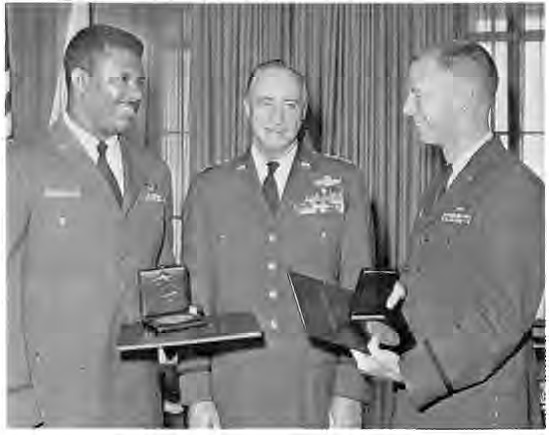
General John P. McConnell, Air Force Chief of Staff, presents the Cheney Award for 1965 to Captains James A. Darden, Jr., and Robert S. Henderson Captains Robert S. Henderson and James A. Darden, HH-43B pilots of Detachment 10, Atlantic Air Rescue Center at Aviano AB, Aviano, Italy, received the 1965 Cheney Award in recognition for saving the lives of 13 people on 2 September 1965 & 3 September 1965, from floods in the Aviano, Italy area that caused extensive damage.
~1961~
1st Lt. William Luther was notified by a county sheriff that a 46-year-o1d woman mountain climber had fallen 40 feet from a ledge on Mt. Baher and broken her right leg near the hip. She had been lying on the mountain nearly six hours. Ground rescue teams were standing by but, because of the rugged terrain, rescue would have been an extremely lengthy operation.
Lieutenant Luther, 1st Lt. Robert Michelsen and MSgt. Lawrence Seckley, Rescue Technician; took off in an HH-43B and flew to an area approximately 75 miles from the base. After picking up the woman's son as a guide, they continued onward to the accident site and made several passes to determine if a landing could be accomplished. Since no suitable area was available, it was decided to drop off Sergeant Seckley to render any first aid possible. The woman was on the side of a 60-degree slope in a shallow crevasse under an overhanging rock ledge, a two-inch cable from an old mine was approximately 75-feet over her position.
Lieutenant Luther brought the HH-43B to a hover over the snow field near the woman's position and Sergeant Seckley jumped into the snow from one of the helicopter's bear paws. He immediately began sliding on the hard crust, unable to get a foot hold. He slid 70 feet down the mountain whose sides continued downward for another 4,000 feet to the valley floor. Finally he managed to gain a hold, but could maintain his perilous position only by not moving. Lieutenant Michelsen then climbed over the left seat to the hoist operator's position. After several attempts and many tense minutes due to the gusty wind condition and the steep incline, Sergeant Seckley managed to catch the swinging hoist lowered to him and was lifted into the helicopter.
After making this hoist pickup, it now seemed there might be a possibility to hover up to the woman and hoist her out. The aircraft was slowly inched higher up the slope into the glacial crevasse with Lieutenant Michelsen clearing Lieutenant Luther on the left as to the nearness to the rock wall and Sergeant Seckley keeping him clear of the cable overhead. The helicopter was now in a position where it could not be maneuvered any higher because of the cable, or brought further forward because of the overhanging cliff. In this position the hoist was approximately seven feet from the woman's husband, who was with her, and he couldn't reach it.
Sergeant Seckley took a coil of the hoist cable, and climbed onto the bear paw and swung the horse collar forward to the husband. The helicopter was now hovering with the blades approximately 18 to 20 inches above the overhanging cliff and 10 feet from the rock face on the left. Maintaining this hover was very difficult due to the turbulent winds blowing up and across the face of the cliff. Lieutenant Luther continually went from full left to full right rudder to hold his position at this 5,000-foot elevation.
After some difficulty, the woman was placed in the sling and Lieutenant Michelsen began slowly hoisting her up and out of the crevasse until it was noticed she still had three climbing ropes tied around her waist and secured to the rocks above her. Unsuccessful attempts were made to attract her husband's attention, but he had begun to climb back up the mountain. Sergeant Seckley then crouched down on the bear paw and managed to cut the ropes. After getting her in the door, the chopper was slowly backed out from the cliff and slid under the cable to a clear area where a 180-degree turn could be made. She was then flown to Paine AFB and a waiting ambulance. FROM KAMAN ROTOR TIPS AUGUST 1961 COURTESY OF JOHAN RAGAY
FROM KAMAN ROTOR TIPS APRIL 1962 COURTESY OF JOHAN RAGAY
~1959~
Captain Mattox Captain Herbert L. Mattox, Jr., a USAF SH-19 Helicopter Pilot with the 33rd Air Rescue Squadron, was awarded the Cheney Award for a rescue in 19 October 1959, when he evacuated 29 crewmen from the Japanese vessel Zenko Maru, which had floundered on the Tori Shima reef.
~1951~ Colonel (Captain at the time) Daniel J. Miller, a USAF H-5 Helicopter Pilot with the 3rd Air Rescue Squadron, was awarded the Cheney Award for a rescue in February 1951, when he landed in deep snow and under enemy fire and rescued a total of six wounded soldiers behind United Nations lines in Korea. Captain Miller picked up two wounded in each of three attempts despite the snow and enemy fire.
| |||||||||||||||||||||||||||||||||||||||


|
"FREEDOM ISN'T FREE" ~SOMEONE PAYS FOR YOU AND ME~ "HELICOPTERS" - THE ONLY WAY TO FLY ~NEVER FORGOTTEN~ |
|